
In the chaotic aftermath of a serious truck crash, evidence is your most powerful asset—but it’s also the most fragile. Critical digital records from the truck’s electronic systems are often automatically erased within weeks. Witness memories fade. The trucking company’s legal team begins its own investigation immediately, aiming to limit their liability.
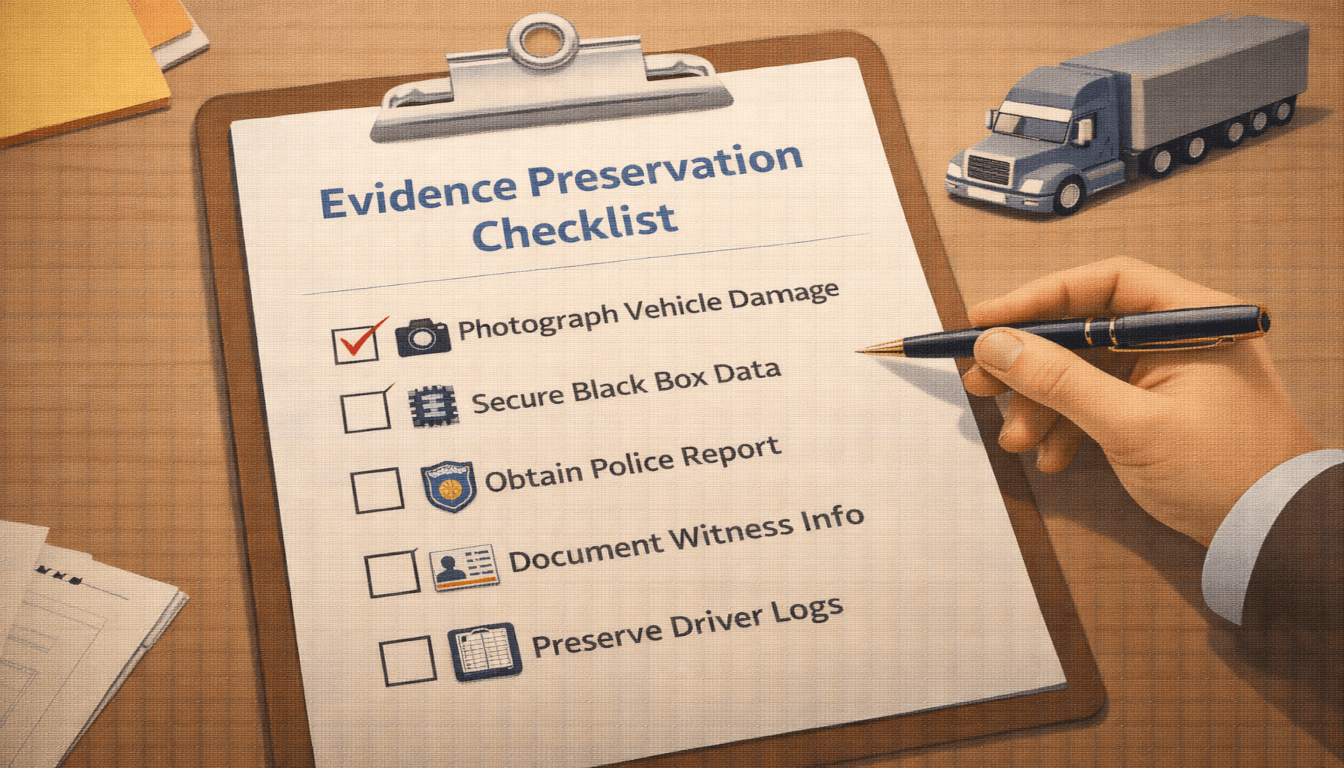
This section provides your step-by-step action plan to secure the proof you need before it disappears. For a concrete, actionable tool you can use right now, download our free Truck Accident Evidence Preservation Checklist (PDF).
The process breaks down into four strategic phases, each designed to lock down a specific category of evidence.
A Step-by-Step Guide to Protect Your Rights After a Crash
This checklist outlines the critical evidence you must preserve to prove negligence and maximize your claim value. Time is your biggest enemy—some evidence can be lost in as little as 30 days.
Immediate Action (Within 24-72 Hours)
Official Documents
- Police Report: Request the official crash report and the officer’s name & badge number.
- Driver & Company Info: Get the truck driver’s CDL number, trucking company name, DOT/MC number, insurance details, and license plate.
- Witness List: Collect names, phone numbers, and email addresses of all witnesses.
Scene Documentation
- Photos & Video: Take wide shots of the entire scene, all vehicle damage (including undercarriage), skid marks, road conditions, traffic signs, and visible cargo.
- Dashcam/Surveillance: Note any nearby businesses, traffic cameras, or homes that might have footage.
- Weather Report: Save the official weather report for the location, date, and time of the crash.
Personal Records
- Medical Attention: Go to the ER or a doctor immediately, even if you feel “okay.” Document all injuries.
- Personal Notes: Write down your clear, detailed memory of the crash while it’s fresh. Include what you saw, heard, and said.
Urgent Legal Actions (Within First Week)
Digital Evidence Preservation – CRITICAL
- Send a Spoliation Letter: Your attorney must immediately send a legal hold letter to the trucking company and its insurer demanding they preserve:
- Electronic Logging Device (ELD) / Hours of Service data
- Electronic Control Module (ECM / “Black Box”) data (records speed, braking, engine RPM)
- Onboard GPS & telematics data
- Driver’s cell phone records and company communications (qualcomm messages)
- All dashcam & fleet camera footage
- Request Maintenance Records: Demand all recent inspection, repair, and maintenance logs for the tractor and trailer.
Official Record Requests
- Complete Police File: Request the full file, including the officer’s notes, diagrams, and any raw data.
- Your Own Insurance: Notify your insurer of the crash but do not give a recorded statement until you consult an attorney.
Ongoing Documentation (Weeks & Months After)
Medical & Financial Paper Trail
- Medical File: Keep a dedicated folder for all records: ER reports, doctor notes, diagnoses, treatment plans, physical therapy records, and all prescriptions.
- Symptom Journal: Keep a daily or weekly log of your pain levels, mobility issues, emotional distress, and how injuries affect your daily life and work.
- Expense Log: Track every related expense: medical bills, travel to appointments, co-pays, medication costs, property damage receipts, and lost wages.
Legal & Case Management
- Lawyer Communication: Keep copies of all correspondence with your lawyer and the insurance companies.
- Social Media Freeze: Do not post anything about the accident, your injuries, or your activities online. Insurance adjusters scour social media for evidence to devalue your claim.
- Follow Medical Advice: Attend all appointments and follow treatment plans exactly. Gaps in care will be used against you.
Key Evidence by Liable Party
| Target | Evidence to Preserve |
| Truck Driver | Driver’s logbook (if paper), cell phone records, post-accident drug/alcohol test results, driving history, training records. |
| Trucking Company | Company safety policy, driver hiring/training files, maintenance schedules, GPS/ELD system data, cargo loading manifests, communication logs with driver. |
| Third Parties | Maintenance contractor invoices, cargo loader records, parts manufacturer details (for defect cases). |
Download & Use This Checklist : Truck Accident Evidence Preservation Checklist (PDF).
☑️ Action Step:
Print this checklist or save it digitally. Go through each item methodically. The single most important action is to contact a specialized truck accident attorney immediately to execute the legal preservation steps (spoliation letters, official requests) before critical evidence is destroyed.
Disclaimer: This checklist provides general guidance. For legal advice specific to your situation, consult with a qualified attorney. Statutes of limitations and evidence rules vary by state.