
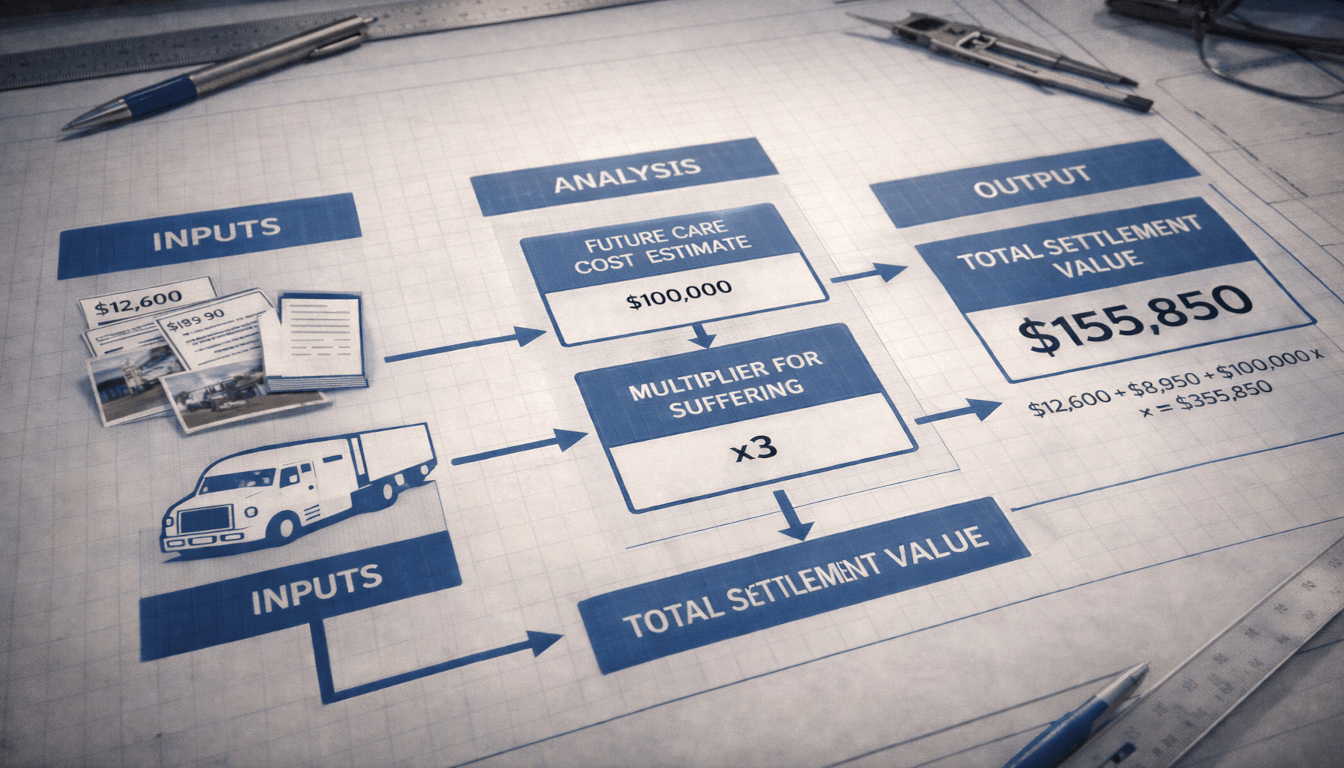
Calculating damages in a semi‑truck accident case is not a simple matter of adding up bills or estimating pain and suffering. These cases involve catastrophic injuries, long‑term medical needs, complex liability issues, and commercial insurance policies designed to protect trucking companies — not victims. Because of this, the valuation process requires a detailed, evidence‑driven approach that looks at the full impact of the crash on a victim’s health, livelihood, and future.
Unlike standard car accident claims, semi‑truck accident valuations rely on specialized evidence such as black box data, driver logs, inspection reports, and expert analysis. Lawyers must build a comprehensive damages model that accounts for immediate losses, projected future costs, diminished earning capacity, and the long‑term effects of physical and emotional trauma. Understanding how these numbers are calculated helps victims recognize the true value of their claim and why trucking insurers often push aggressively to settle for less.
If you need a foundational overview of the types of compensation available before diving into the calculation process, see Compensation in Semi‑Truck Accident Cases.
Key Takeaways
- Semi‑truck accident damages require a more complex valuation process than standard car crash claims.
- Lawyers must establish liability before accurately calculating any category of damages.
- Economic damages include medical bills, future care, lost wages, and diminished earning capacity.
- Non‑economic damages are based on pain, suffering, emotional distress, and long‑term life impact.
- Strong evidence and expert analysis significantly increase the accuracy and value of a damages model.
- Insurance policy limits, multiple defendants, and bad‑faith behavior can dramatically affect final compensation.
Why Damage Calculation in Semi‑Truck Accident Claims Is Different
Federal crash‑causation research from the FMCSA shows that large truck crashes often involve complex contributing factors and severe outcomes, including higher rates of serious injury and death compared to typical passenger‑vehicle collisions. The sheer size and weight of an 80,000‑pound semi‑truck create forces that lead to traumatic brain injuries, spinal cord damage, complex fractures, and long‑term disability — all of which dramatically increase the complexity of calculating damages.
But injury severity is only one part of the equation. Semi‑truck accident claims also involve:
- Multiple layers of liability, including the driver, trucking company, broker, shipper, cargo loader, and maintenance providers
- Strict federal regulations, such as hours‑of‑service rules, inspection requirements, and cargo‑securement standards
- Commercial insurance policies with higher limits, exclusions, and aggressive defense strategies
- Specialized evidence, including black box data, ELD records, GPS logs, and maintenance histories
All of these factors must be analyzed before a lawyer can build an accurate damages model. The more complex the liability and evidence, the more detailed the valuation process becomes.
For a deeper look at the types of damages victims can pursue, see Economic and Non‑Economic Damages in Semi‑Truck Accident Claims.
Step 1 — Establishing Liability Before Any Damage Calculation Begins
Understanding who is legally responsible is the foundation of every semi‑truck accident damages calculation. The FMCSA’s regulations outline strict rules for driver conduct, vehicle maintenance, inspections, and hours‑of‑service — and violations of these rules often play a central role in determining fault. Before a lawyer can estimate any category of damages, they must first establish liability with precision, because fault directly affects whether a victim receives full compensation or a reduced amount under comparative negligence laws.
Liability analysis in a semi‑truck accident is far more complex than in a standard car crash. Lawyers and investigators must examine a wide range of technical and regulatory evidence, including:
- Black box (ECM/EDR) data showing speed, braking, throttle, and mechanical performance
- Driver logs and hours‑of‑service records to identify fatigue or logbook violations
- GPS and telematics data that reveal route deviations, sudden stops, or unsafe driving patterns
- Inspection and maintenance reports documenting whether the truck was safe to operate
- Cargo loading documentation to uncover improper securement or overweight loads
If liability is unclear, disputed, or spread across multiple parties, insurers often use that uncertainty to deny claims or drastically undervalue them. To understand how these disputes commonly arise — and how victims can protect themselves — see Top Reasons Semi‑Truck Accident Claims Are Denied.
Step 2 — Documenting All Economic Losses
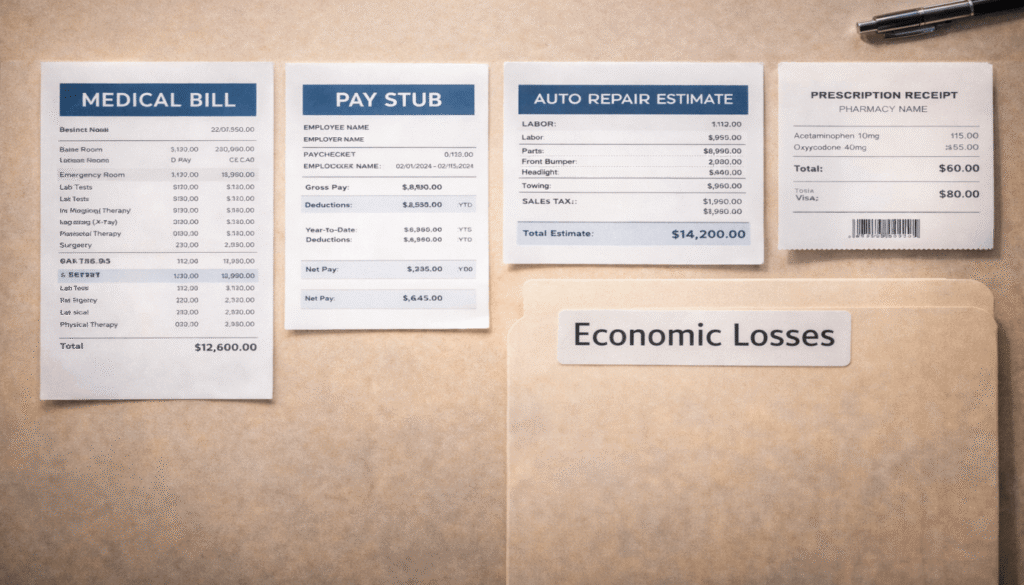
Long‑term injury data from the CDC shows that serious trauma often results in years of medical treatment, reduced earning capacity, and substantial out‑of‑pocket costs — all of which must be carefully documented to calculate economic damages in a semi‑truck accident claim. These losses form the financial foundation of a valuation model because they are measurable, evidence‑based, and directly tied to the victim’s recovery and future needs.
Medical Bills and Future Medical Care
Economic damages begin with medical expenses, but in semi‑truck accident cases, the scope is far broader than emergency treatment alone. Lawyers must account for:
- Emergency room care and hospitalization
- Surgeries and follow‑up procedures
- Physical therapy, occupational therapy, and long‑term rehabilitation
- Prescription medications and medical devices
- Specialist evaluations, imaging, and diagnostic testing
- Home health care or assisted living support
For victims with catastrophic injuries — such as spinal cord damage, traumatic brain injuries, or severe orthopedic trauma — attorneys often work with life‑care planners to project decades of future medical needs, including surgeries, therapies, and long‑term support services.
Lost Wages and Loss of Earning Capacity
Semi‑truck accident victims frequently miss extended time from work, and some never return to their prior occupation. Calculating wage‑related losses requires:
- Employer documentation of missed work
- Pay stubs, tax returns, and employment records
- Expert vocational assessments to determine long‑term limitations
- Economic projections for reduced earning capacity
If the victim can no longer perform the same job — or must transition to lower‑paying work — the loss of earning capacity becomes a major component of the damages model.
Property Damage and Out‑of‑Pocket Costs
Economic losses also include the practical, day‑to‑day expenses victims incur because of the crash, such as:
- Vehicle repair or replacement
- Rental car or transportation costs
- Home or vehicle modifications for disability
- Medical equipment (wheelchairs, braces, mobility aids)
- Travel expenses for medical appointments
- Childcare or household help during recovery
These costs may seem small individually, but together they can significantly increase the total valuation.
For more insight into how insurers challenge or minimize these documented losses, see Semi‑Truck Accident Claims.
Step 3 — Calculating Non‑Economic Damages
Research from the National Institutes of Health shows that chronic pain, psychological trauma, and long‑term emotional distress can dramatically alter a person’s daily functioning and overall quality of life — which is why non‑economic damages play such a critical role in semi‑truck accident valuations. Unlike medical bills or lost wages, these losses cannot be measured with receipts. Instead, they reflect the human impact of the crash and the ways the victim’s life has been permanently changed.
Non‑economic damages often include:
Pain and Suffering
This covers both physical pain and the ongoing discomfort associated with surgeries, rehabilitation, nerve damage, mobility limitations, and chronic conditions. Lawyers often use medical records, provider notes, and symptom journals to demonstrate the severity and duration of pain.
Emotional Distress
Semi‑truck accidents frequently lead to psychological injuries such as anxiety, depression, sleep disturbances, and post‑traumatic stress. Mental health evaluations, therapy records, and testimony from loved ones help quantify these invisible but very real harms.
Loss of Enjoyment of Life
Victims may no longer be able to participate in hobbies, exercise routines, family activities, or daily tasks they once enjoyed. This category captures the loss of independence, fulfillment, and personal identity that often follows a catastrophic injury.
Loss of Consortium
This refers to the impact on intimate relationships, companionship, and family dynamics. Spouses and partners may experience emotional strain, reduced support, or changes in household roles due to the victim’s injuries.
Permanent Disfigurement or Disability
Scarring, amputations, burns, and long‑term physical impairments significantly increase non‑economic damages because they affect a victim’s confidence, mobility, and long‑term quality of life.
In cases involving reckless, intentional, or egregious misconduct — such as drunk driving or falsified logbooks — punitive damages may also be available. To understand when these additional damages apply, see Punitive Damages in Semi‑Truck Accident Cases.
Step 4 — Using Evidence to Support the Damage Model
Data from a truck’s electronic control module (ECM) — often called the “black box” — can reveal critical information about speed, braking, throttle position, and mechanical performance in the moments before a crash. The National Transportation Safety Board highlights how event data recorders play a key role in reconstructing collisions and identifying contributing factors. This type of technical evidence is essential in semi‑truck accident cases because it helps lawyers build a precise, evidence‑based damages model that insurers cannot easily dispute.
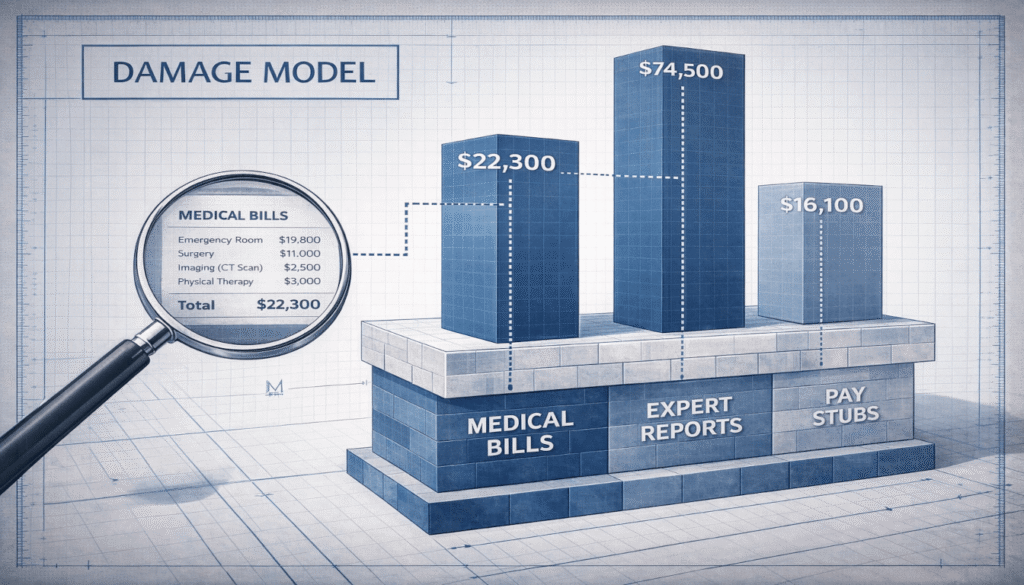
A strong valuation relies on multiple forms of evidence, including:
Medical Records and Imaging
These documents establish the severity of injuries, the treatment required, and the long‑term medical outlook. Imaging such as MRIs, CT scans, and X‑rays helps demonstrate the physical impact of the crash.
Expert Testimony
Medical experts, vocational specialists, economists, and life‑care planners provide professional opinions that quantify future medical needs, lost earning capacity, and long‑term disability.
Accident Reconstruction
Reconstruction specialists analyze skid marks, vehicle damage, ECM data, and scene evidence to determine how the crash occurred and who is responsible. Their findings often strengthen both liability and damages arguments.
Black Box and ELD Data
ECM and electronic logging device (ELD) data can reveal speeding, hard braking, hours‑of‑service violations, and mechanical issues — all of which influence liability and the value of the claim.
Witness Statements
Statements from bystanders, passengers, or other drivers help corroborate the victim’s account and fill in details that technical data may not capture.
Employer Documentation
Employment records, wage statements, and job descriptions help quantify lost wages and reduced earning capacity, especially when injuries prevent a victim from returning to their prior role.
Because insurers often challenge or minimize evidence to reduce payouts, victims benefit from understanding how evidence is preserved and used strategically. For a deeper look at the role of evidence in building a strong case, see Preserving Evidence in Semi‑Truck Accident Cases.
Step 5 — Understanding the Role of Insurance Policy Limits
The FMCSA’s minimum insurance requirements show that commercial carriers must carry far higher liability coverage than personal drivers — often starting at $750,000 and increasing based on cargo type and risk. While these limits are designed to protect the public, they are frequently insufficient in semi‑truck accident cases involving catastrophic injuries, long‑term disability, or wrongful death. When damages exceed available coverage, lawyers must explore additional avenues to secure full compensation.
Why Policy Limits Matter in Damage Calculations
Insurance policy limits set the ceiling for what an insurer is obligated to pay. Even if a victim’s damages are worth millions, the insurer will not voluntarily pay beyond its policy limits unless:
- Multiple policies apply
- Additional defendants share liability
- The insurer acted in bad faith
This makes early investigation critical. Lawyers must identify every potentially liable party and every available insurance policy before building a damages model.
When Damages Exceed Policy Limits
In high‑value cases, attorneys may pursue:
- Additional defendants such as brokers, shippers, maintenance companies, or manufacturers
- Umbrella or excess liability policies carried by the trucking company
- Vicarious liability claims against employers or parent companies
- Bad‑faith actions if the insurer unreasonably delays, denies, or undervalues the claim
These strategies can significantly expand the total compensation available to the victim.
To understand how liability can extend beyond the driver and trucking company, see Multi‑Party Liability in Semi‑Truck Accidents.
Step 6 — How Semi-Truck Lawyers and Experts Build a Comprehensive Valuation
Long‑term care planning resources like What Is LifeCare? explain how serious health conditions often require coordinated medical treatment, support services, and ongoing assistance over many years. In a semi‑truck accident case, a proper damages model has to account for that same long‑range reality. It’s not just about what the victim needs today, but what they will need medically, financially, and functionally for the rest of their life.

To capture that full picture, lawyers rely on a team of experts, each contributing a different piece of the valuation:
Medical Specialists
Medical specialists such as orthopedic surgeons, neurologists, pain doctors, and rehabilitation physicians provide diagnoses, treatment plans, and long‑term prognoses. They help determine whether injuries are permanent, progressive, or likely to require future surgeries, procedures, or ongoing care.
Vocational Experts
Vocational experts evaluate how the injuries affect the victim’s ability to work. They look at job duties, physical and cognitive limitations, education, and the labor market to determine whether the person can return to their old job, transition to different work, or is effectively removed from the workforce.
Life‑Care Planners
Life‑care planners take medical and functional information and turn it into a detailed roadmap of future needs: therapies, medications, assistive devices, home modifications, in‑home care, and more. Their plans often span decades and become a central piece of high‑value semi‑truck accident claims.
Economists
Economists translate all of this into numbers. They calculate the present and future value of lost wages, reduced earning capacity, and long‑term care costs, adjusting for inflation, work‑life expectancy, and other economic factors so the damages model reflects real‑world financial impact.
Accident Reconstructionists
Accident reconstructionists analyze crash dynamics, ECM data, vehicle damage, and roadway evidence to explain how the collision occurred and who is responsible. A clear, science‑based reconstruction strengthens both liability and the credibility of the damages model these other experts build on.
When these experts work together, they create a unified, evidence‑backed valuation that is much harder for insurers to dismiss or undercut. To see how this expert‑driven valuation fits into the broader legal process, review Semi‑Truck Accident Law Explained.
Step 7 — How Insurance Companies Calculate and Discount Damages
Many insurers use computer‑driven claims software to estimate the value of an injury case. A consumer alert from the Consumer Federation of America on computer‑generated injury claim valuations explains how these systems may systematically underpay bodily injury claims by relying on rigid formulas, medical billing codes, and treatment timelines. In semi‑truck accident cases — where injuries are often severe and long‑lasting — these software‑generated ranges frequently fall far below the true value of the victim’s losses.
Beyond software, trucking insurers use a variety of tactics to reduce or dispute damages:
Disputing Medical Necessity
Insurers may argue that certain treatments, diagnostic tests, or therapies were unnecessary or unrelated to the crash, even when prescribed by treating physicians.
Challenging Causation
Adjusters often claim that injuries were pre‑existing, degenerative, or caused by something other than the collision. This is especially common with spinal injuries, chronic pain, and traumatic brain injuries.
Using Surveillance
Insurers may hire investigators to record video of the victim performing everyday tasks, hoping to use brief, out‑of‑context moments to undermine injury claims.
Monitoring Social Media
Photos, comments, and check‑ins — even unrelated to physical activity — can be used to challenge pain‑and‑suffering claims or suggest greater physical ability than reported.
Delaying Claim Processing
Slow responses, repeated document requests, and prolonged “review periods” are common tactics used to pressure victims into accepting lower settlements.
Because these strategies can significantly reduce the value of a claim, understanding how insurers operate behind the scenes is essential. For a deeper look at unfair insurance practices and how victims can protect themselves, see Bad Faith Insurance Tactics in Semi‑Truck Accident Claims.
Step 8 — Negotiation, Settlement Ranges, and Litigation Pressure
Settlement negotiations in semi‑truck accident cases take place “in the shadow of the law,” meaning each side evaluates what could happen if the case proceeds to court. As the Harvard Program on Negotiation explains, negotiation outcomes are shaped by legal risk, evidence strength, and the credibility of each party’s position. In trucking cases — where injuries are severe and liability may involve multiple defendants — these factors play an even larger role in determining settlement value.

Several key elements influence the settlement range:
Strength of Evidence
Detailed medical records, expert reports, ECM data, and accident reconstruction increase leverage by making the damages model harder for insurers to dispute.
Severity of Injuries
Catastrophic injuries, permanent disability, and long‑term care needs significantly raise the value of a claim and increase the insurer’s risk if the case goes to trial.
Expert Support
Life‑care planners, vocational experts, economists, and medical specialists provide the foundation for a credible, defensible valuation.
Insurance Policy Limits
Even strong cases are constrained by available coverage unless additional defendants, umbrella policies, or excess insurance can be identified.
Litigation Pressure
Insurers often increase their offers only after a lawsuit is filed, depositions begin, or trial preparation reveals the strength of the plaintiff’s case. Litigation pressure is one of the most effective tools for moving a claim into a fair settlement range.
Punitive Exposure
When evidence suggests reckless or egregious conduct — such as intoxication, falsified logbooks, or repeated safety violations — the threat of punitive damages can dramatically increase negotiation leverage.
To understand why settlement negotiations in trucking cases are so different — and why litigation pressure often drives higher offers — see Why Semi‑Truck Accident Cases Are Unique.
Real‑World Examples of Damage Calculations
Industry research shows that truck‑accident damages vary widely depending on injury severity, liability strength, and long‑term medical needs. A national analysis of trucking accident trends — such as the one published by the American Chain of Warehouses, Inc. — highlights how serious injuries, regulatory violations, and commercial‑vehicle size contribute to higher claim values and more complex damage calculations.
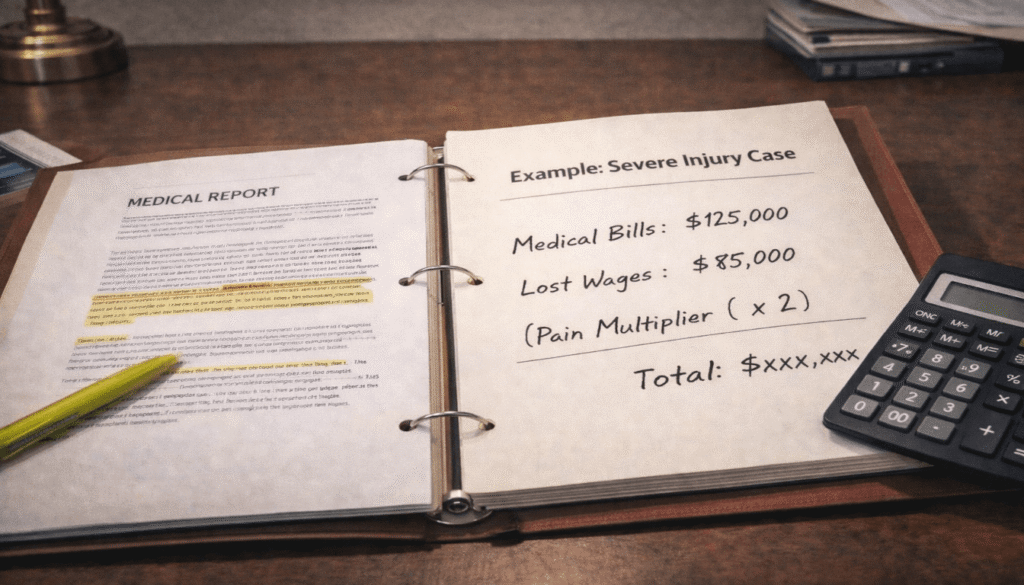
Below are real‑world, documented patterns drawn from industry studies, safety reports, and national verdict data. These examples illustrate how damages are typically calculated without referencing any law‑firm‑published cases.
Example 1 — Spinal Injury With Long‑Term Disability
Industry data shows that spinal injuries from truck collisions often result in high lifetime medical costs, including:
- Surgical intervention
- Ongoing pain management
- Mobility limitations
- Reduced earning capacity
These injuries frequently require long‑term care and limit future employment, making them one of the highest‑valued categories of truck‑accident damages.
Example 2 — Traumatic Brain Injury Requiring Ongoing Support
National transportation safety research consistently identifies traumatic brain injuries (TBIs) as one of the most expensive injury categories in commercial‑vehicle crashes. Damage calculations typically include:
- Cognitive therapy
- Home modifications
- Long‑term supervision or support services
- Loss of earning capacity
TBIs often produce decades of projected care needs, significantly increasing valuation.
Example 3 — Multiple Fractures and Extended Time Off Work
Trucking‑industry injury data shows that victims with multiple fractures often face:
- Months of lost wages
- Rehabilitation and physical therapy
- Chronic pain or reduced mobility
- Temporary or permanent work restrictions
Even when injuries are not catastrophic, the combination of medical costs and lost income can produce substantial damages.
Example 4 — Severe Injury Combined With Safety Violations
Industry studies show that when a crash involves:
- Hours‑of‑Service violations
- Improper maintenance
- Overloaded trailers
- Inadequate driver training
…the value of the claim increases because these factors strengthen liability and raise the risk of punitive exposure.
Example 5 — National Trends in Truck‑Accident Compensation
According to aggregated industry research:
- Severe‑injury cases are significantly more likely to result in high‑value settlements
- Fatality‑related cases often exceed six‑figure payouts
- Cases involving long‑term disability show the highest lifetime cost projections
These trends help illustrate how damages are calculated in real‑world trucking cases, even without referencing individual law‑firm case files.
Table: Injury Types and Typical Valuation Factors
| Injury Type | Key Valuation Factors | Why It Increases Damages |
|---|---|---|
| Spinal Injury | Surgery, long‑term care, mobility limits, loss of earning capacity | High lifetime medical costs and permanent impairment |
| Traumatic Brain Injury | Cognitive therapy, home modifications, supervision needs | Long‑term or permanent cognitive deficits requiring decades of care |
| Multiple Fractures | Rehab, physical therapy, lost wages, chronic pain | Extended recovery time and functional limitations |
| Amputations | Prosthetics, revisions, psychological impact, vocational loss | Permanent disability and high future medical costs |
| Severe Burns | Surgeries, skin grafts, infection risk, scarring | Long‑term treatment and significant pain‑and‑suffering valuation |
| Internal Organ Damage | Surgeries, long‑term monitoring, reduced function | High medical costs and long‑term health complications |
Sidebar: How Experts Calculate Lifetime Costs
Life‑care planners, economists, and medical specialists work together to project the long‑term financial impact of a truck‑accident injury. Their calculations typically include:
1. Medical Needs Over Time
- Future surgeries
- Medications
- Physical and occupational therapy
- Assistive devices
- Home health aides
2. Functional Limitations
- Mobility restrictions
- Cognitive impairments
- Need for home modifications
- Loss of independence
3. Work‑Life Impact
- Loss of earning capacity
- Reduced work hours
- Early retirement due to disability
4. Economic Modeling
Economists apply:
- Inflation rates
- Medical‑cost growth rates
- Life expectancy
- Discount rates
…to calculate the present value of future costs.
This structured, evidence‑based approach ensures the damages model reflects the true lifetime impact of the injury.
Visual Chart: National Trends in Semi-Truck Accident Compensation
Truck Accident Compensation Trends (National Data)

High-Value Cases (Severe Injury)     ████████████████████  (Most common)
Moderate-Value Cases (Fractures)     ████████████
Low-Value Cases (Minor Injury)       ████

Fatality Cases Over $600k            █████████████████████████
Cases With Long-Term Disability      ████████████████████

Impact of Safety Violations:
No Violations                        ███████
Major Violations (HOS, Maintenance)  ███████████████████
Interpretation:
- Severe injuries and fatalities consistently produce the highest payouts.
- Cases involving safety violations show a dramatic increase in settlement value.
- Long‑term disability is one of the strongest predictors of high lifetime cost projections.
How Victims Can Strengthen Their Own Damage Claim
A strong damages claim begins with consistent medical care and clear documentation. Resources like the American Medical Association’s Symptom Diary show how tracking pain levels, physical limitations, and daily challenges can help establish the severity of injuries over time. In semi‑truck accident cases, this kind of documentation becomes critical evidence when calculating both economic and non‑economic damages.
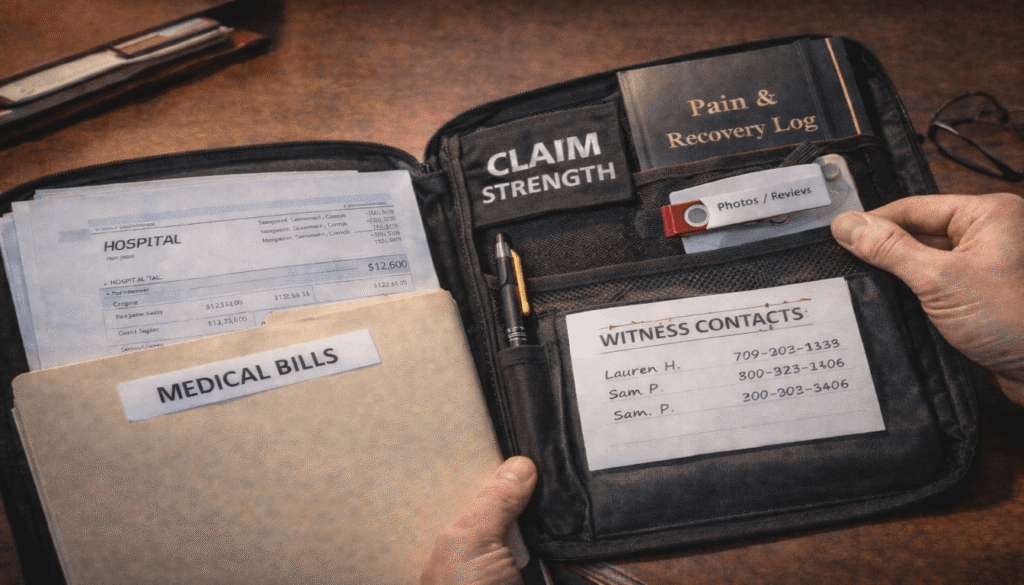
Victims can strengthen their claim by taking the following steps:
Following All Medical Treatment
Attend every appointment, follow physician recommendations, and avoid gaps in care. Missed visits or inconsistent treatment can give insurers an excuse to argue that injuries are not serious.
Documenting Symptoms and Limitations
Use a symptom diary to record pain levels, mobility issues, sleep disruption, emotional changes, and activity limitations. This helps demonstrate how the injury affects daily life and supports long‑term damages.
Avoiding Social Media Posts
Photos, comments, and check‑ins — even unrelated to physical activity — can be taken out of context and used to challenge the severity of injuries.
Keeping Receipts and Records
Save receipts for medications, medical devices, transportation to appointments, home modifications, and any out‑of‑pocket expenses. These items help substantiate economic damages.
Consulting a Lawyer Early
Early legal guidance helps preserve evidence, prevent mistakes, and ensure that documentation supports the full value of the claim.
For more guidance on early steps that protect your case, see What to Do After a Semi‑Truck Accident.
Understanding Damage Calculations Helps Victims Protect Their Full Compensation
Semi‑truck accident cases are complex, and calculating damages requires far more than adding up medical bills. When victims understand how liability, evidence, expert analysis, insurance limits, and long‑term medical needs all factor into valuation, they’re better equipped to protect their rights and avoid being underpaid.
By documenting symptoms, following medical treatment, preserving evidence, and seeking legal guidance early, victims can strengthen their claim and ensure that every category of loss is fully accounted for.
To learn more about the types of compensation available in trucking cases — and how each category is calculated — see Compensation in Semi‑Truck Accident Cases.
Frequently Asked Questions About Semi‑Truck Accident Damage Calculations
How Are Damages Calculated After a Semi‑Truck Accident?
Damages are calculated by reviewing medical bills, lost income, future care needs, pain and suffering, and the long‑term impact of the injuries. Evidence such as medical records, expert reports, and accident reconstruction helps establish the full value of the claim.
Why Are Semi‑Truck Accident Claims Worth More Than Regular Car Accidents?
Semi‑truck accidents often cause more severe injuries, involve federal safety regulations, and may include multiple liable parties. These factors increase both the complexity and the potential value of the claim.
What Evidence Is Most Important for Proving Damages?
Medical documentation, symptom diaries, receipts, employment records, and expert evaluations are essential. Strong evidence makes it harder for insurers to dispute the severity of injuries or the cost of future care.
Can Insurance Companies Reduce the Value of My Claim?
Yes. Insurers may challenge medical necessity, dispute causation, monitor social media, or delay the process to pressure victims into accepting lower settlements. Understanding these tactics helps victims protect their claim.
How Do Lawyers Estimate Future Medical Costs and Lost Earning Capacity?
Lawyers work with life‑care planners, economists, and medical experts who project long‑term treatment needs, rehabilitation costs, and the financial impact of reduced earning ability. These projections are used to calculate future damages.
Do Policy Limits Affect How Much Compensation I Can Receive?
Yes. Even strong cases may be limited by the available insurance coverage unless additional defendants, umbrella policies, or excess insurance can be identified.
What Can Victims Do to Strengthen Their Damage Claim?
Following medical treatment, documenting symptoms, keeping receipts, avoiding social media, and consulting a lawyer early all help protect the value of the claim.
How Long Does It Take to Settle a Semi‑Truck Accident Claim?
Timelines vary. Claims with severe injuries, disputed liability, or complex expert evaluations often take longer. Cases may settle faster when evidence is strong and liability is clear, but litigation pressure can also increase settlement value.
Can Punitive Damages Increase the Value of a Truck Accident Case?
Yes. If the trucking company or driver engaged in reckless or egregious conduct — such as falsifying logbooks or violating safety regulations — punitive damages may apply, increasing negotiation leverage.