

Preserving evidence in semi‑truck accident cases is critical—especially when the stakes are this high. Each year, between 4,000 and 5,000 lives are lost in U.S. truck crashes, with thousands more suffering life‑altering injuries. In the chaos that follows, the steps victims and families take to document and protect semi‑truck accident evidence can determine whether justice is secured or lost.
From paper logs to electronic data recorders, quick action secures the facts that connect liability, causation, and damages. Attorneys often send formal preservation letters to stop destruction and protect material that a carrier or custodian controls.
Time is critical: many ELD and EDR devices overwrite key data within weeks. Securing downloads, maintenance files, phone records, and witness notes early preserves the chain of custody for a strong semi‑truck accident claim. For a step‑by‑step overview of the lawsuit process, see Semi‑Truck Accident Lawsuits Explained.
Your Immediate Evidence Preservation Checklist:
- At the Scene: Photograph vehicles, damage, road conditions, and the truck’s DOT number.
- Within 24 Hours: Seek medical care (records link injuries to the crash) and request the police report.
- Within Days: Have a lawyer send a spoliation letter to the trucking company to legally demand preservation of the black box (ECM), electronic logs (ELD), and maintenance records.
- Ongoing: Keep a journal of symptoms, save all bills/receipts, and direct all insurance calls to your attorney.
Key Takeaways
- Act fast: digital logs and device data can disappear within weeks.
- Formal preservation letters stop spoliation and protect vital records.
- Paper records, maintenance files, and witness statements build a strong claim.
- Attorneys coordinate scene actions, downloads, and expert inspections.
- Missed windows can weaken a semi‑truck accident case and reduce recovery.
Preserving Evidence in Semi‑Truck Accident Cases: Why It Matters for Victims
Critical materials can vanish within days after a semi‑truck accident unless steps are taken immediately to secure them. Rapid action locks down digital logs, paper records, and physical parts that show how the crash unfolded. That early work protects facts that link fault, causation, and compensation.
Why Critical Evidence Disappears Quickly After Semi‑Truck Accidents
Onboard recorders and electronic logs often overwrite data on short cycles. Trucking companies also follow routine retention rules that can purge files. Repairs, cleaning, and shifting witness contact details further reduce the available information. Spoliation may occur without notice. The IIHS: Large Trucks Research highlights how safety data and crash records can vanish quickly, underscoring the need for prompt preservation.
How Evidence Drives Liability, Causation, and Compensation
Preserving relevant files ties vehicle speed, braking, hours of service, and maintenance gaps to fault. Missing FMCSA records can signal noncompliance and strengthen a semi‑truck accident claim.
| Source | Risk of Loss | Legal Value |
|---|---|---|
| EDR / ELD Data | Overwritten within days | Shows speed, braking, hours |
| Maintenance Records | Discarded or altered | Reveals mechanical causes |
| Witness Notes | Memory fades quickly | Corroborates timelines |
Attorneys often send formal preservation letters to compel retention and reduce the burden on injured parties. Quick, coordinated steps create leverage and improve chances for fair compensation. For more on how evidence supports claims, see Evidence in Semi‑Truck Accident Cases.
Immediate Actions After a Semi‑Truck Accident to Protect Proof
Minutes after a semi‑truck accident, the actions taken by those on scene often determine which facts remain available later. First responders and bystanders should focus on safety, medical care, and creating a clear record that professionals can use.

Safety First: Medical Care, 911, and Law Enforcement Reports
Prioritize medical attention. Call 911 and let responders document injuries. Officers produce a crash report that often records fault indicators, citations, witness names, and initial statements. The NHTSA Crash Reporting Overview explains how official reports preserve critical data that can later support liability claims.
Capture the Scene: Photos, Videos, and Vehicle Damage
Take photos and videos of vehicle damage, skid marks, debris, lighting, weather, and signage before cleanup. These visuals document physical evidence and the road context for later review in semi‑truck accident cases.
Collect Identities: Drivers, Witnesses, First Responders
Gather names, phone numbers, and insurance details for all drivers and witnesses. Note contact info for first responders and the responding agency. Obtain the official crash report within a week or two and keep all medical and insurance paperwork.
| Action | Why It Matters | When To Do It |
|---|---|---|
| Call 911 / Seek Care | Creates medical and official record | Immediately |
| Photograph Scene | Preserves vehicle damage and road cues | Before cleanup or vehicle removal |
| Collect Contacts | Secures witness statements and follow‑up | While still on scene |
Early, deliberate actions at the road anchor later analysis and help attorneys and experts reconstruct the event. For common questions and next steps, see FAQs for Semi‑Truck Accident Victims.
Legal Preservation Tactics to Prevent Spoliation in Semi‑Truck Accident Claims
A lawyer’s early moves can lock down fragile materials before normal processes erase crucial records. Rapid legal notice creates formal duties for custodians and starts the clock on retention. These actions are vital for preserving semi‑truck accident evidence that supports later claims.
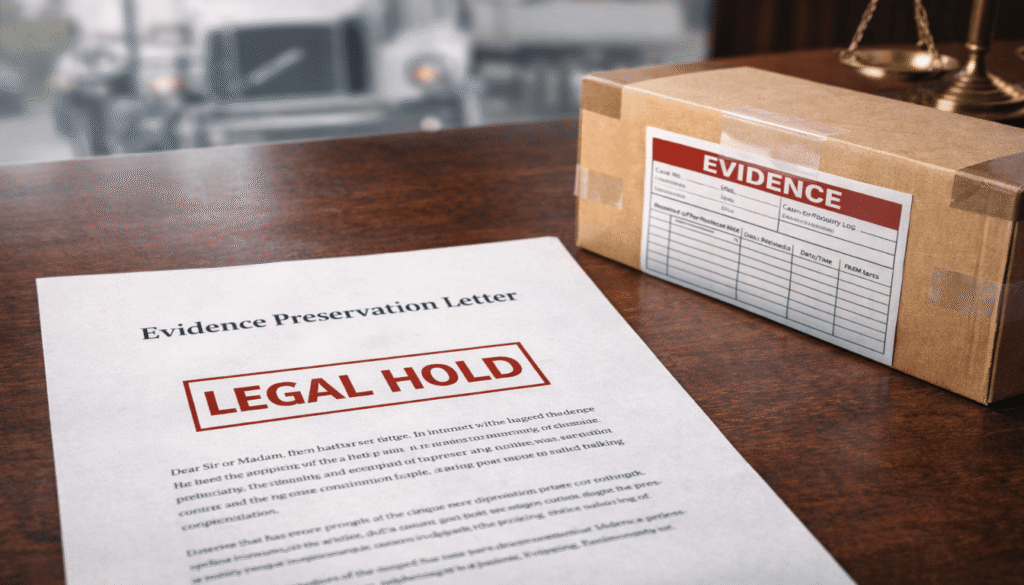
Preservation and Spoliation Letters to Trucking Companies
Counsel sends spoliation letters to the carrier, related vendors, and any custodian. The letters list specific categories: driver logs, maintenance files, emails, and onboard electronic data. Failure to comply can lead to sanctions, adverse inferences, or punitive remedies that help the injured party. The Judicature overview of Rule 37(e) explains how courts address spoliation of electronic evidence and why early preservation letters are critical.
Securing the Truck and Its Black Box Before Data Is Overwritten
Teams move quickly to park and secure the tractor‑trailer to avoid routine servicing that may erase the black box. Expert seizure and imaging preserve time‑stamped metrics that can prove speed, braking, and mechanical conditions in semi‑truck accident claims.
Coordinating Independent Inspections and Expert Downloads
Independent inspectors document mechanical defects like worn brakes and tire tread. Forensic technicians then perform controlled downloads of EDR/ELD files.
- Chain‑of‑custody protocols are set at inspection.
- Download snapshots capture speed, braking, and location.
These precise steps lock in crucial evidence and strengthen the claim. For more on how experts support semi‑truck accident litigation, see Expert Witnesses in Semi‑Truck Accident Claims.
Electronic Data in Semi‑Truck Accidents: ELDs, EDRs, and Cell Phone Records
Forensic downloads of semi‑truck systems can show exact speed, braking, and directional changes that no human memory matches. These digital records often provide a precise timeline of what the truck and driver were doing in the crucial seconds before impact.
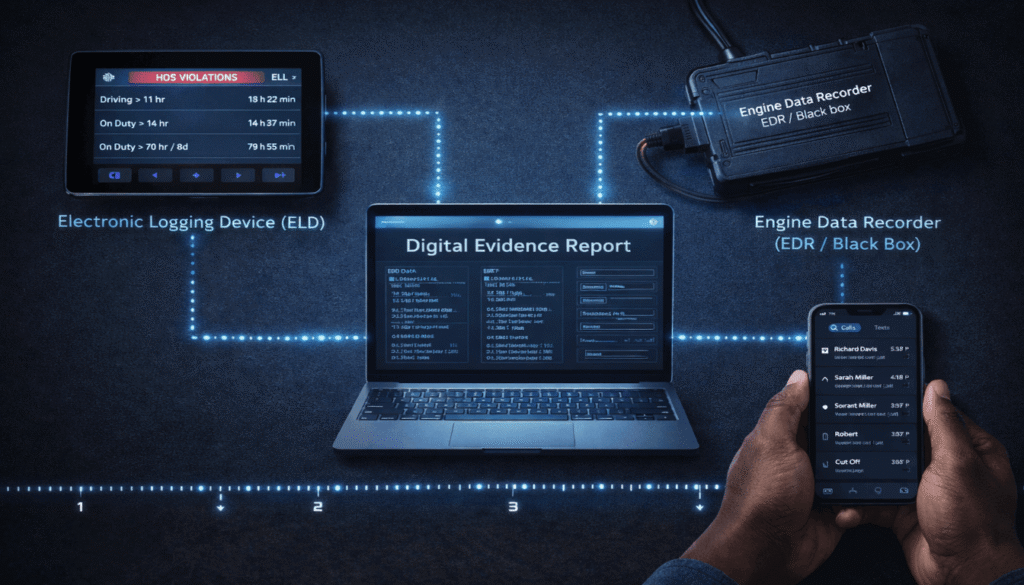
Event Data Recorder “Black Box” Metrics: Speed, Braking, and Location
EDRs record speed, brake application, direction, component status, and crash signatures. That raw data helps reconstruct the semi‑truck’s motion and mechanical response. Strong timestamping links speed and braking inputs to collision moments for expert analysis. The NHTSA Event Data Recorder overview explains how black box metrics are used in crash investigations.
Electronic Logging Devices: Hours of Service and Fatigue Indicators
ELDs track hours, driver logins, and duty status. These files show compliance with hours‑of‑service rules and reveal rest patterns that may indicate fatigue. When combined with other records, hours logs can flag schedule violations that relate to causation in semi‑truck accident claims.
Driver Mobile Phone Data: Distraction, GPS, and Timeline Corroboration
Cell phone records provide call and text timestamps, app activity, and GPS traces. These entries corroborate or challenge onboard data and witness timelines. Investigators use phone logs to detect distraction, routing differences, or off‑duty behavior that affects liability.
Digital evidence is often the backbone of semi‑truck accident litigation. For more on how attorneys integrate these records into broader claims, see Multi‑Party Liability in Semi‑Truck Accidents.
Retention Windows And Rapid Requests To Prevent Auto-Deletion
Time is short: some devices overwrite files in weeks. Trucking firms may not back up records without formal notice.
Rapid, technical preservation and forensic downloads keep data integrity and chain of custody for court or settlement use.
| Source | Key Metrics | Retention Risk |
|---|---|---|
| EDR (Black Box) | Speed, braking, direction, system status | Overwrites within weeks to a month |
| ELD | Hours, duty status, log edits | Routine purges; backups not guaranteed |
| Driver Mobile Phone | Calls, texts, GPS, app timestamps | Provider retention varies; device resets risk loss |
- Forensic downloads maintain admissible records and a clear chain of custody.
- Combining multiple sources reduces gaps and builds a coherent timeline.
- Well-timed electronic data can expose operational lapses and strengthen negotiation or trial presentation.
Physical Evidence and Witness Testimony in Semi‑Truck Accident Investigations
Careful cataloging of wreckage and roadway traces lets experts map forces and sequence. The damaged semi‑truck can reveal impact points, deformation patterns, and the order of contact when it is not altered or repaired.
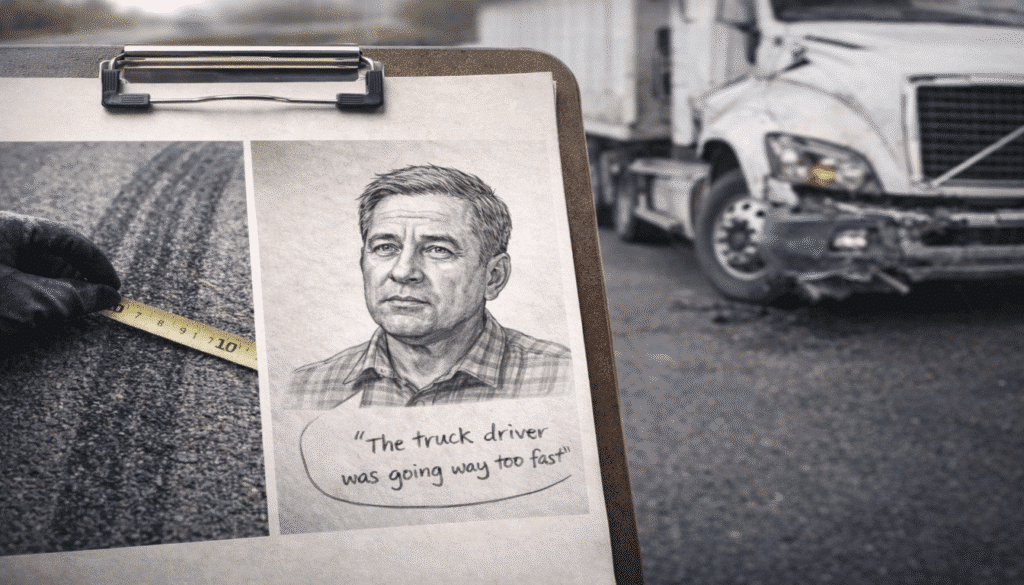
Vehicle Damage Patterns and Roadway Evidence
Experts analyze vehicle damage to read energy transfer, crush depth, and panel intrusion. These clues show angle, force, and which part hit first. Scene photos should include the road surface, skid marks, gouges, debris fields, spills, weather, and lighting. That road context helps reconstruct trajectories and speeds. Delaying repairs or disposal protects structural and mechanical components like brakes, axles, and tires for later inspection. The NHTSA Crash Investigation Sampling System (CISS) highlights how roadway evidence and vehicle damage are cataloged to support liability findings.
Witness Interviews and Timely Statement Preservation
Secure witness statements early. Memories fade and contact details often change, so prompt interviews increase reliability. Police reports usually list initial witness names and citations. Independent inspections can then test for worn brake pads, bald tires, or faulty safety gear that tie to injuries and liability.
- Catalog physical artifacts and photos methodically.
- Lock down contact information and short recorded statements.
- Coordinate inspections so mechanical findings corroborate electronic logs.
- Organize materials for attorneys to assess causation and prepare a stronger claim.
Physical and testimonial evidence together form the backbone of semi‑truck accident investigations. For common pitfalls that can weaken a case, see Mistakes to Avoid After a Semi‑Truck Accident.
Company Records in Semi‑Truck Accident Cases: Maintenance Logs, Driver Files, and Official Reports
The file review often decides how strong a semi‑truck accident claim will be. A focused review of shop sheets, inspection reports, and driver logs frequently uncovers inconsistencies critical to proving liability.

Maintenance Records and Safety Compliance Gaps
Maintenance records and inspection reports show scheduled work, repairs, and missed items. These files can reveal pattern failures or single defects that match crash mechanics. Auditors compare shop dates, odometer readings, and part replacements to spot lapses. Missing entries or altered logs may point to broader compliance issues by the company. The FMCSA Compliance, Safety, Accountability (CSA) Program outlines how maintenance and inspection records are tracked to identify safety violations.
Police Crash Reports, Citations, and Supplemental Materials
Police reports list fault indicators, witness names, and citations. Attorneys obtain copies quickly to lock this official information and to cross‑check other records.
Medical Records, Bills, and Insurance Communications
Collect all medical records, treatment plans, bills, pharmacy receipts, and insurer letters. These documents quantify injury severity, economic loss, and out‑of‑pocket costs for compensation. Organize statements and EOBs chronologically so the legal team can build a clear damages narrative.
| Source | What It Shows | Retention Risk | Use For Claim |
|---|---|---|---|
| Maintenance Records | Repairs, inspections, part history | May be altered or discarded | Supports mechanical‑failure theories |
| Driver Logs | Hours, routes, duty status | Edited; backups not guaranteed | Shows fatigue or log tampering |
| Police Report | Scene notes, witness contacts, citations | Obtain within 1–2 weeks | Corroborates timelines and fault |
| Medical Records | Treatment, bills, prognosis | Patient should secure copies | Quantifies injury and compensation |
Issue early document requests to prevent routine purges. Authenticate and maintain chain of custody for admissibility. Synthesize records into timelines that link operational lapses to crash mechanics. For more on how damages are calculated from these records, see Economic and Non‑Economic Damages in Semi‑Truck Accident Claims.
Regulatory Deadlines and Timing Factors in Semi‑Truck Accident Lawsuits
Federal rules and filing deadlines frame how quickly parties must act after a serious highway collision. The interplay between agency records and court timelines often decides whether a client keeps their right to pursue compensation in a semi‑truck accident case.

FMCSA Rules, Recordkeeping, and Company Paper Trails
The FMCSA sets standards for driver qualifications, hours‑of‑service, maintenance, and recordkeeping. These rules create a paper trail that can be audited for gaps or violations. Attorneys compare required records to what a trucking company produces to find discrepancies that suggest noncompliance. The FMCSA Hours of Service Regulations provide a clear framework for how driver fatigue and duty status are tracked.
State Laws, Statutes of Limitations, and Deadlines
Statutes of limitations vary by state. Missing a filing deadline can bar a claim entirely. Counsel must map state‑specific time limits and any administrative windows to ensure the case proceeds on its merits.
How Lawyers Use Regulations to Negotiate and Litigate Semi‑Truck Accident Claims
Lawyers use regulatory violations to build bargaining leverage. Proof of recordkeeping lapses or hours violations can imply negligence per se or show a pattern of unsafe practices.
“Proving a company ignored federal rules often shifts settlement dynamics and raises potential exposure.”
Prompt steps to preserve evidence and meet procedural deadlines strengthen injury claims and clarify settlement expectations. For more on how federal rules shape liability, see How Federal Trucking Regulations Affect Semi‑Truck Accident Cases.
Turning Preserved Evidence into a Strong Semi‑Truck Accident Claim
Preserving evidence in semi‑truck accident cases is not just a procedural step—it is the foundation of a successful claim. From black box downloads to witness statements, every piece of proof strengthens the chain of causation and liability. When victims and families act quickly, they protect their right to fair compensation and ensure that critical facts are not lost to routine purges or fading memories.
Attorneys use preserved records to negotiate settlements, prove negligence, and prepare for trial. The process may feel overwhelming, but with deliberate steps and legal guidance, victims can transform fragile evidence into leverage that compels accountability. For a complete overview of how lawsuits progress from filing to resolution, see Semi‑Truck Accident Lawsuits Explained.
Frequently Asked Questions: Preserving Evidence in Semi‑Truck Accident Cases
What should a claimant do first after a semi‑truck accident?
The priority is medical care. Call 911 and get documented treatment. If safe, photograph the semi‑truck accident scene, the vehicles, and road conditions. Collect names and contact details for drivers, passengers, and witnesses. Notify counsel promptly so legal preservation steps can begin before perishable items are lost.
Why do critical items often disappear after semi‑truck collisions?
Commercial fleets rotate trucks, repair vehicles quickly, and routinely overwrite digital records. Companies may discard maintenance paperwork or reset event data recorders. Physical evidence like debris and skid marks can be cleared by cleanup crews. Acting fast prevents loss of key material that proves liability and causation in semi‑truck accident claims.
How can an attorney stop a carrier from deleting or altering records?
A lawyer issues a written legal hold or preservation letter to the trucking company, driver, and insurer. That notice demands retention of all relevant records and devices and warns against spoliation. Counsel can follow with subpoenas, ex parte preservation requests to courts, or emergency motions when immediate risk exists.
What role does the truck’s event data recorder play in a semi‑truck accident claim?
The event data recorder (EDR) captures metrics such as speed, braking, throttle, and time stamps. Those logs confirm driver actions and timeline. Lawyers arrange expert downloads quickly because many systems overwrite data after a limited number of events or days.
How do electronic logging devices and hours‑of‑service logs affect fault and damages?
ELD records verify duty status, driving hours, and rest breaks. They reveal HOS violations that suggest fatigue or improper dispatching. Demonstrating duty irregularities strengthens semi‑truck accident claims against drivers and carriers for negligence or negligent supervision.
Can cell phone records help build a case against a semi‑truck driver?
Yes. Mobile records and app data can show texting, calling, GPS location, and timestamps. Counsel seeks preservation and forensic extraction of device data to corroborate distraction or route inconsistencies. Rapid preservation prevents providers from purging logs that could prove fault in a semi‑truck accident.
What physical evidence should be secured from the scene and vehicles?
Photographs of vehicle damage patterns, underride or override marks, paint transfer, tire impressions, and guardrail or sign damage are vital. Preserving the semi‑truck’s braking system, tires, load condition, and cargo documentation helps experts assess mechanical failures or improper loading.
How important are witness statements, and how are they preserved?
Eyewitness accounts confirm events, actions, and timeline. Attorneys conduct recorded interviews promptly, document contact information, and secure sworn statements when possible. Quick preservation reduces memory fade and strengthens credibility in semi‑truck accident litigation.
What maintenance and inspection records should victims request?
Request the semi‑truck’s maintenance logs, inspection reports, repair orders, driver vehicle inspection reports (DVIRs), and cargo securement records. These documents reveal deferred repairs, missed inspections, or recurring defects that assign liability to the carrier or maintenance provider.
How do police reports and citations factor into a semi‑truck accident claim?
Police crash reports and citations provide official findings, diagrams, witness lists, and initial fault assessments. While not definitive, they support timelines and help identify investigative leads like surveillance footage or additional witnesses.
What deadlines should claimants and lawyers watch after a semi‑truck accident?
Statutes of limitations vary by state and by claim type. Federal rules and FMCSA retention requirements also set timing for some records. Prompt legal consultation ensures preservation notices and subpoenas occur well inside critical windows to avoid lost rights.
How do attorneys use FMCSA and other regulations in negotiations?
Counsel leverages violations of FMCSA rules—hours of service, maintenance, driver qualifications—as evidence of negligence. Regulatory breaches increase settlement value and provide concrete standards against which the carrier’s conduct is measured in semi‑truck accident lawsuits.
When should independent inspections and expert downloads occur?
Experts should inspect vehicles and download data as soon as a legal hold is in place and access is granted. Early forensic examination captures transient signs of failure, sensor histories, and load conditions that repair or routine use may obscure later.
What if the carrier resists handing over records or denies access to the semi‑truck?
Counsel can subpoena records, seek preservation orders, and move for sanctions if the carrier spoliates material. Courts can compel production, appoint neutral forensic examiners, or impose evidentiary penalties when refusal undermines justice in semi‑truck accident claims.
How do medical records and billing documents support a semi‑truck accident damage claim?
Medical records establish injury severity, treatment timelines, and causation. Bills and wage records quantify economic loss. Organized medical evidence links the semi‑truck accident to tangible costs that form the basis for compensation demands.
How long do companies typically retain ELD and EDR data?
Retention times vary by device and provider. Some EDR systems overwrite after a small number of events; ELD providers often keep logs for months but may purge older data. Rapid preservation requests and litigation holds prevent unwanted deletion in semi‑truck accident cases.
Are photographs and video from bystanders or dash cams reliable in semi‑truck accident claims?
Yes. Photographs and video provide objective documentation of position, speed indicators, lighting, and road conditions. Attorneys authenticate media through metadata and witness testimony to establish admissibility and probative value in semi‑truck accident lawsuits.
How does early legal involvement improve recovery prospects?
Early counsel acts quickly to lock down physical and digital material, coordinate experts, and file preservation demands. This prevents loss of critical proof, builds a clear causal narrative, and strengthens negotiation leverage with insurers in semi‑truck accident claims.
What role do insurance communications play after a semi‑truck accident?
Insurer statements, reservation‑of‑rights letters, and recorded adjuster interviews provide insight into the carrier’s position. Counsel manages communications to avoid self‑damaging admissions and obtains discovery to expose shifting defenses.
Can a claimant obtain surveillance or GPS footage from nearby businesses or public cameras?
Yes. Nearby cameras often capture pre‑ and post‑crash movement. Attorneys promptly issue preservation requests to businesses and public entities and subpoena footage before overwrites or routine deletions occur in semi‑truck accident investigations.
⚖️ Disclaimer: The content of this article is for informational purposes only and does not constitute legal advice. The information provided is based on general research and is not intended to be a substitute for professional legal advice or consultation with a qualified attorney. Always consult with a lawyer regarding your specific legal situation.